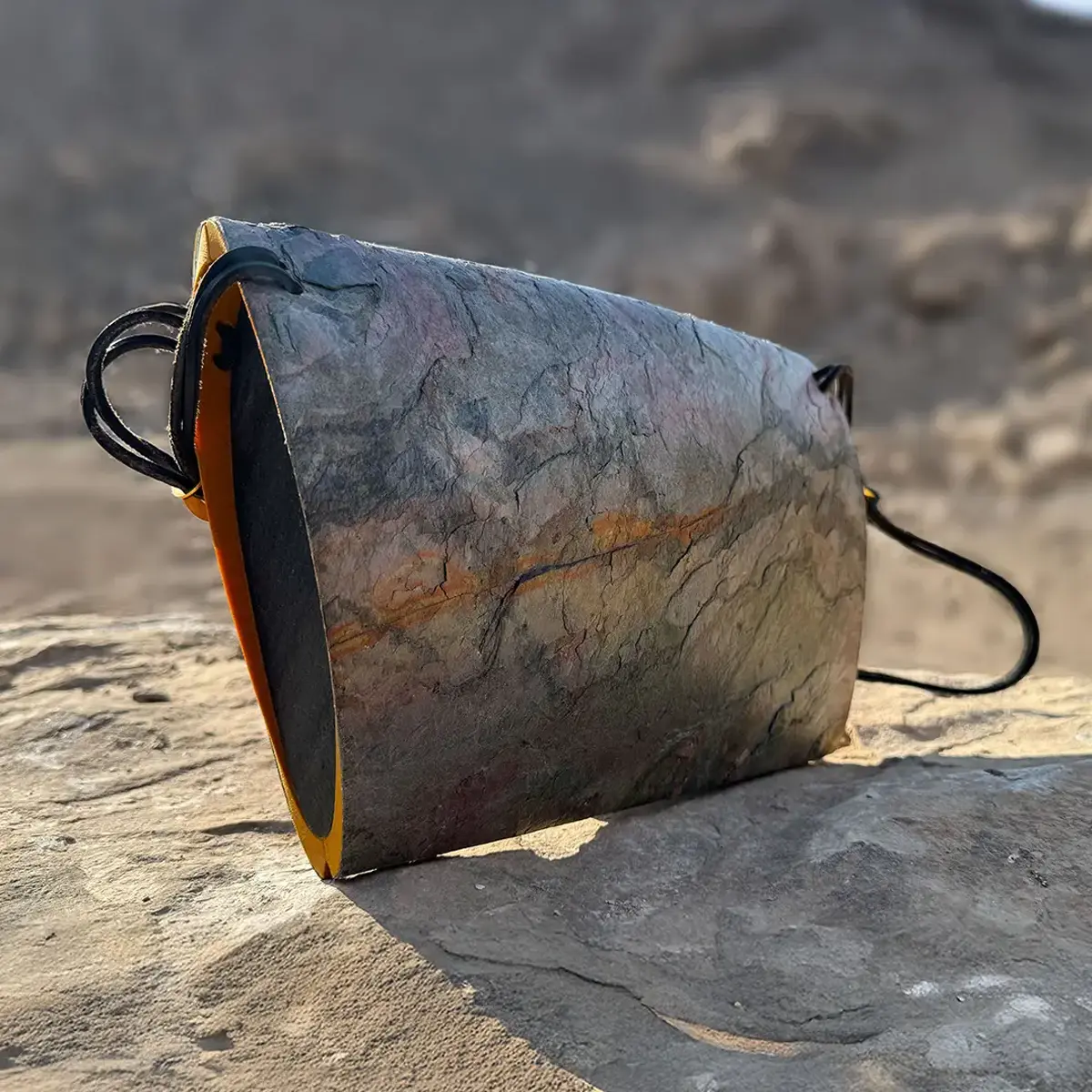
§ 01 — Preface
The term pyroclast points to formal kinship, not to a design intention.
The slate structure remains untreated. Its fracture lines and transitions shape the appearance and reflect the tension between geological mass and constructive order.
§ 02 — Structure
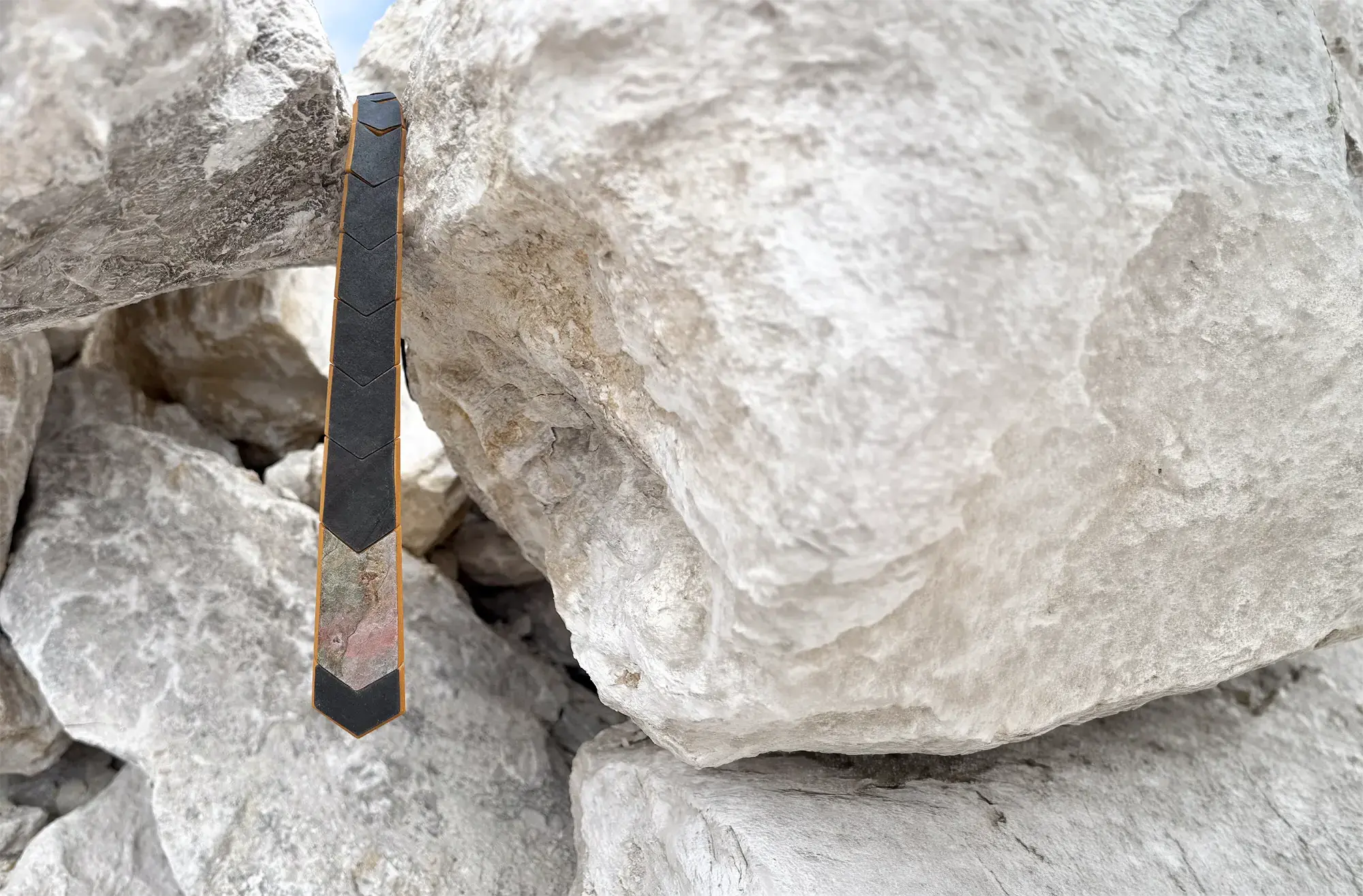
The tie divides into dark, overlapping slate plates whose chevron cut yields to the movement of the body.
§ 03 — Construction
Low material thickness and a weight-reduced, segmented construction keep the tie light. Movable connections allow the drape of a classic tie.
The tie is put on over the head instead of being knotted. The leather band carries the slate segments, which lie flat on the sternum.
Details.
§ 04 — Material
- Lapidermis
- Deep black slate segments with a varying surface structure.
- Unpolished, with a visibly open layering.
- Feature stone
- Mica schist with a greenish tint and visible red-orange veins.
- The stone pattern varies with material selection.
- Neckband
- Flexible genuine leather neckband following the bolo tie principle.
- Steplessly adjustable via the sliding tie knot.
- Construction
- Movably connected elements with a chevron-shaped cut.
- Dimensions
- 5.3 × 42.5 × 0.6 cm
- Weight
- approx. 55 g
- Edition
- Pyroclast
§ 05 — Acquisition
Each object is made individually, with natural variations in the slate and individual differences in the finishing.