Materials.
"Each material has its specific characteristics, which we must understand if we want to use it."
— Ludwig Mies van der Rohe
II · i
Slate — Lapidermis.
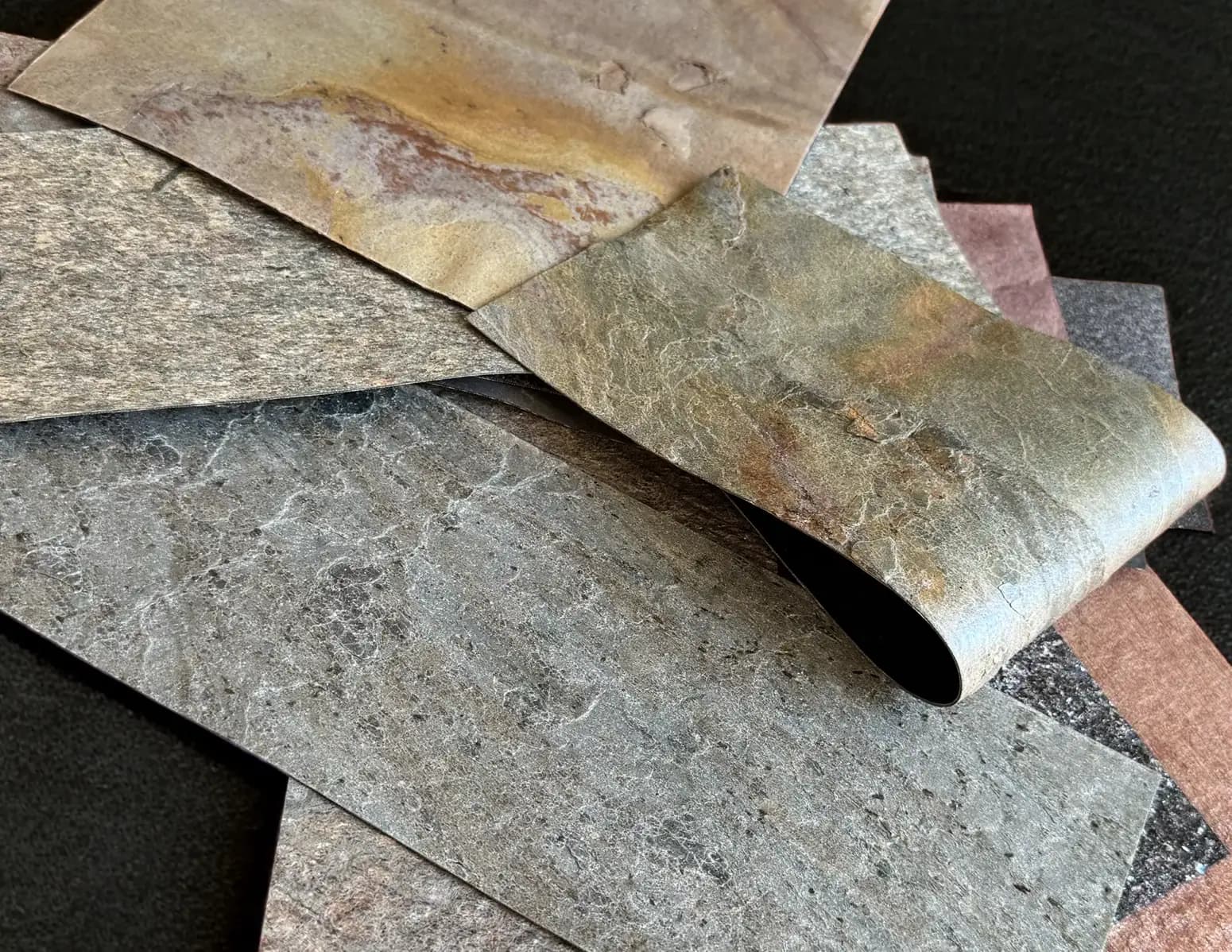
lapis · derma — stone · skin
As lapidermis, slate forms the most visually prominent component of all AUREIR objects. It is an approximately 1.5 mm layer of genuine natural stone. As the surface of all exposed stress zones and contact areas, the lapidermis protects the objects from force and wear through its native robustness.
Surface structure and grain are unique in every lapidermis.
Slate is a collective term for different rocks characterized by a fine structure of parallel layers.
Geologically, slate belongs to the metamorphic rocks: those formed under immense pressure or high temperature in the heart of the earth, without melting. In most types of slate, the fissile structure is the product of tectonic displacement acting on formerly massive layers of rock.
Surface structure and grain are unique in every lapidermis. Accordingly, every AUREIR object is one of a kind; the slate cuts used for each veneer are personally selected to give every piece an individual character.
II · ii
Cork — Endocortex.
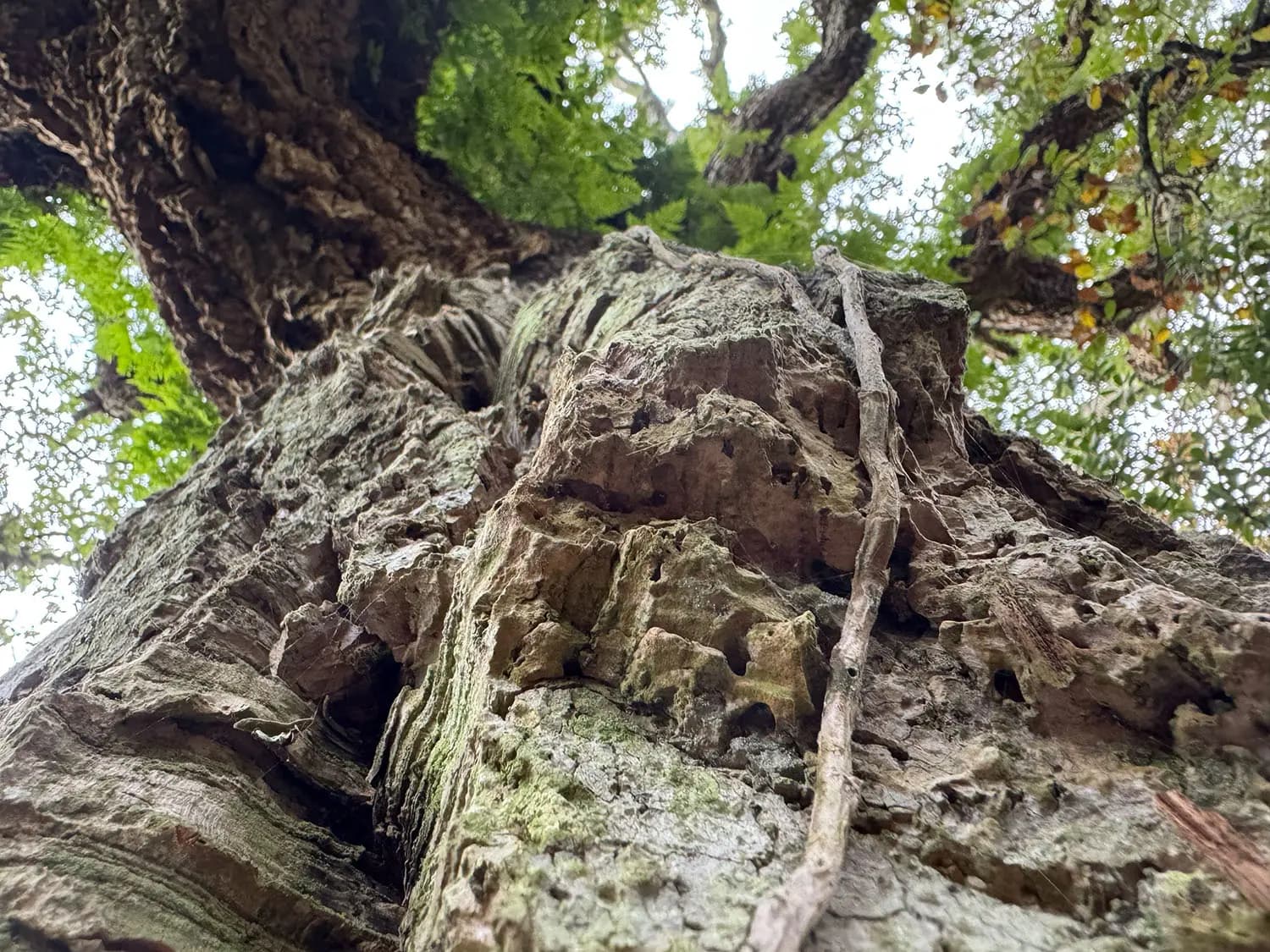
endo · cortex — inner · bark
Interior surfaces are lined with Portuguese cork.
The material is light, water-repellent, and elastic, while also functioning as a natural acoustic buffer. These properties qualify it as the interior lining of AUREIR bags, which are designed for cultural settings such as concerts or opera visits, where sound reduction is expected as a matter of course.
Cork can be harvested without felling the tree.
The cork used is harvested from the bark of the cork oak (Quercus suber), which grows predominantly in Mediterranean regions of Portugal.
The bark can be harvested at multi-year intervals. The tree remains intact and gradually forms new layers of bark.
During natural growth, newly formed organic material binds carbon. The harvested cork retains this bound carbon, which remains stored for the duration of the product’s use.
Cork represents a material understanding grounded in durability, reusability, and responsible use of natural resources, aligning in its entirety with the AUREIR philosophy.
II · iii
Wood Filament — Corpus.
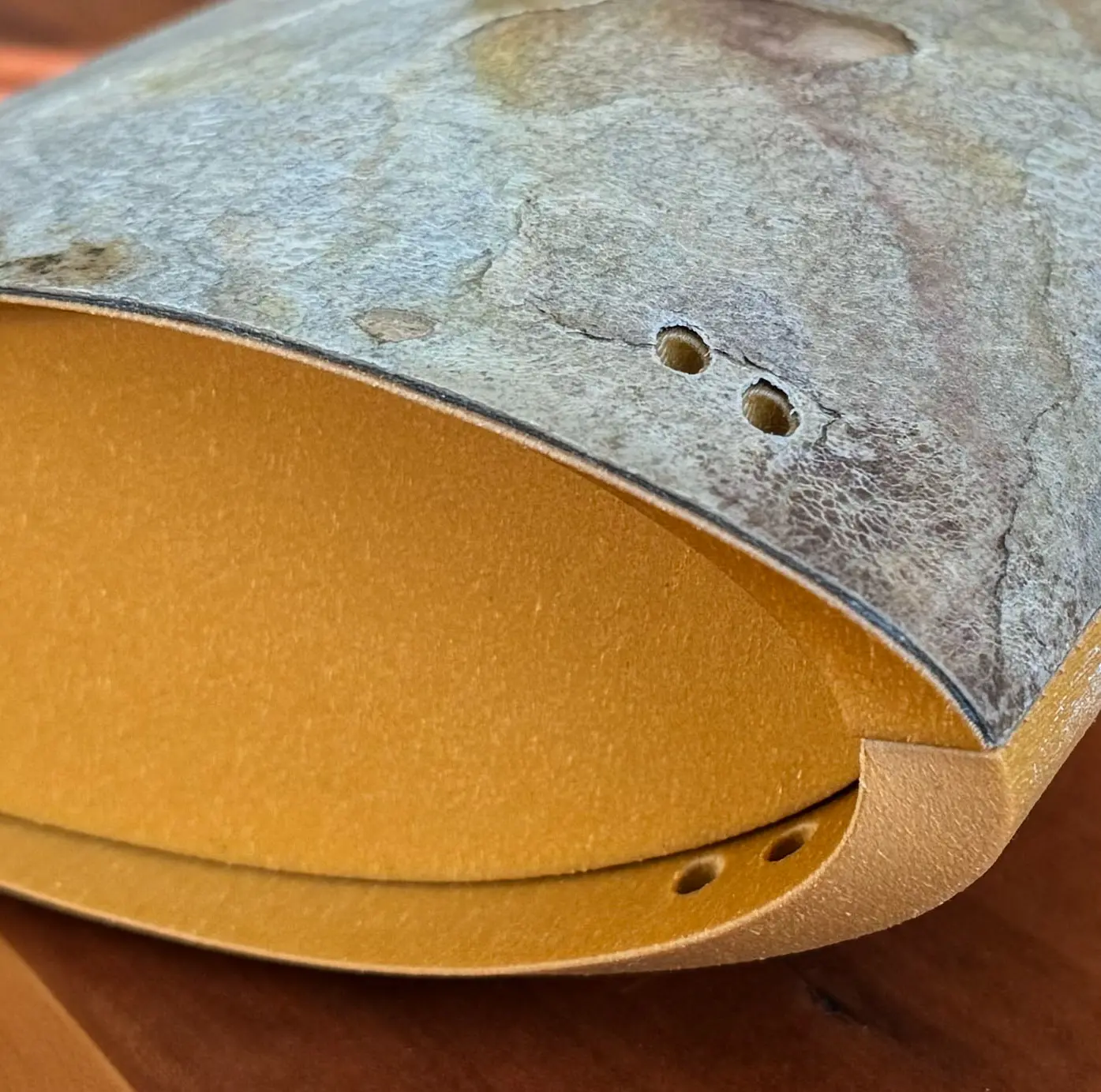
corpus — body · carrier
Many material alternatives for bag production today are derived from petroleum-based plastics or recycled plastic. Recycling does not fundamentally change the material; it merely shifts the timing of the problem. The material circulates until it is ultimately incinerated or deposited.
AUREIR takes a different approach. The body is made from a bio-based polymer, derived from renewable resources such as corn starch and reinforced with wood fibers. This approach reduces the use of fossil resources and improves the overall material balance.
Low weight with high structural stability.
PLA is a bio-based polymer and is biodegradable under industrial composting conditions.
The combination of polymer matrix and wood fibers enables low weight with high structural strength. The body remains dimensionally stable and resilient, even at low material thickness, making AUREIR objects comfortable to wear.
The wood fibers visibly shape the surface and material expression. The appearance is matte, organic, and clearly distinct from petrochemical plastics. Each object exhibits its own material structure.
Regardless of considerations of degradability, all objects are designed for long-term use. Material selection follows the principle of maximizing durability so that structural integrity and function remain central throughout the product lifecycle.