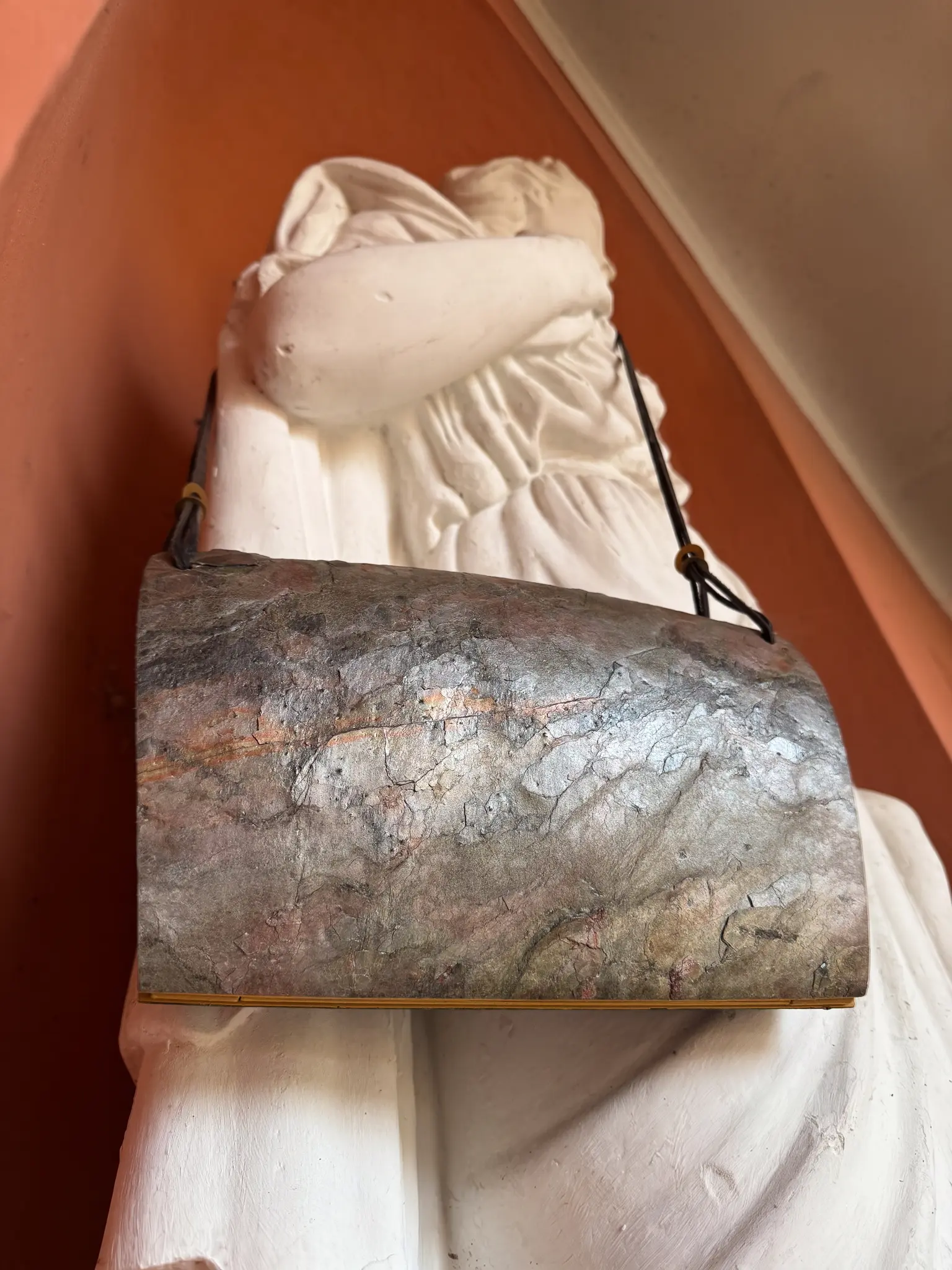
Pyroclast evening bag displayed on a statue in front of an orange wall
AUREIR · Chapter III

Intention

"Modern architecture is the superfluous created from the correct recognition of a missing necessity."

— Karl Kraus

III · i

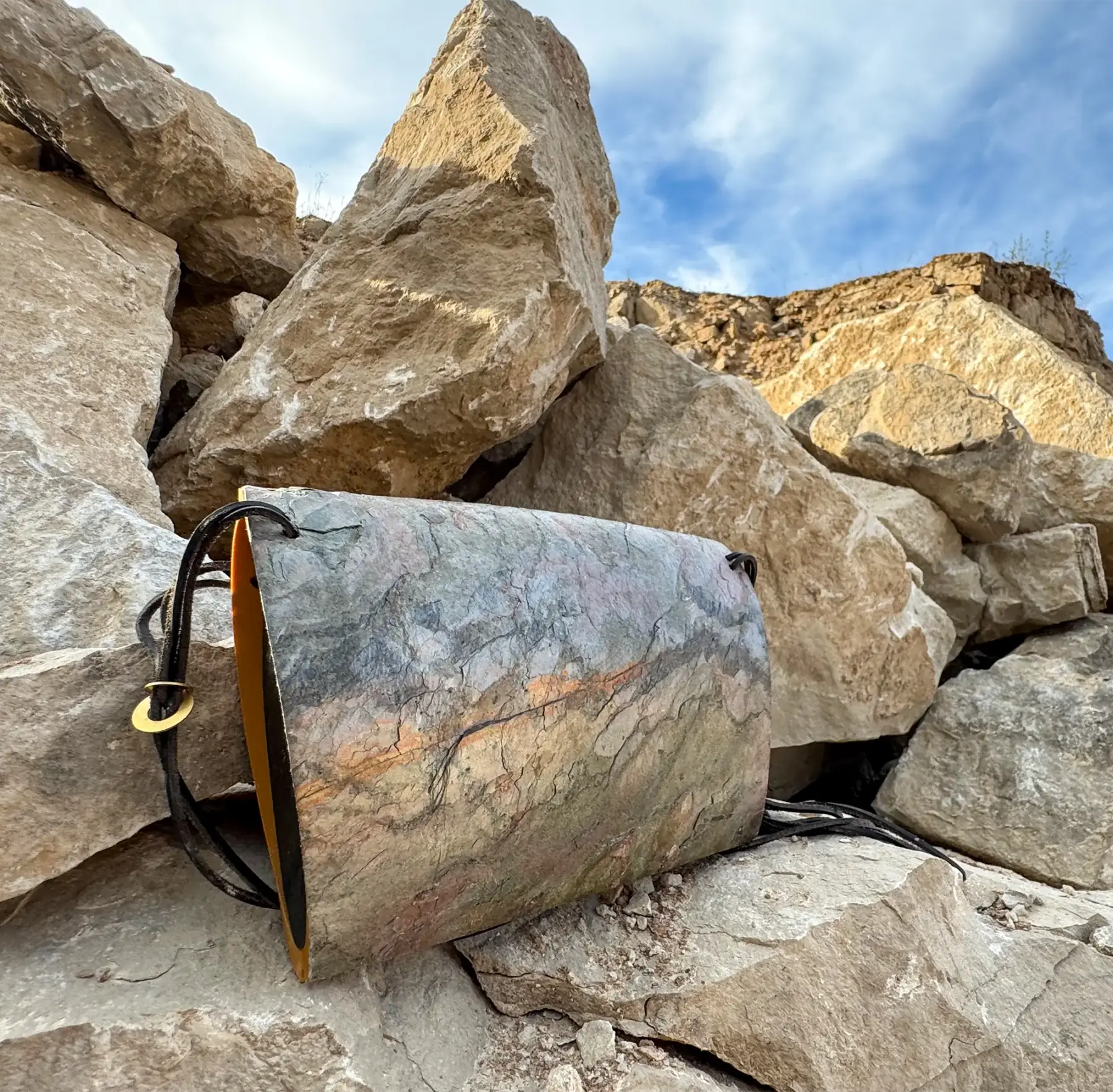
Pyroclast evening bag with slate surface among rocks
Pyroclast · Lapidermis
Let the material speak for itself, and appear unveiled in the form. Brick should appear as brick, wood as wood, iron as iron.
— Gottfried Semper

Material integrity is an axiom of modern architecture. It describes the use of materials in accordance with their inherent properties, structure, and effect, while keeping them visibly present.

Load-bearing capacity, tactility, ageing process, and the geological presence of stone shape the form, as do the elasticity and resonance of organic components. Form emerges from what the material allows and demands.

This principle is fundamental to AUREIR: the design of new objects always begins with the chosen materials, never the other way around.

The combined components remain legible and visible. They are not concealed, repurposed, or ironically imitated as in postmodern architecture. Clarity, functionality, and the “truth” of each material are preserved and deliberately acknowledged.

By not only allowing but deliberately pushing unconventional combinations of authentic materials to their limits, material integrity evolves from a guiding framework into the foundation of design. The gravitas of stone merges with the ethereal lightness of 3D-printed wood filament, forming a paradoxical presence that does not deny its components, but transcends them.

AUREIR objects stand on their own, positioned between established viewpoints. Without nostalgia for the naive lightness of modernism, they leave behind the theoretical burden of postmodern design and open space for trust in individual perspectives. They are metamodern, neither dogmatically collectivist nor individualist, but above all: compelling.
III · ii

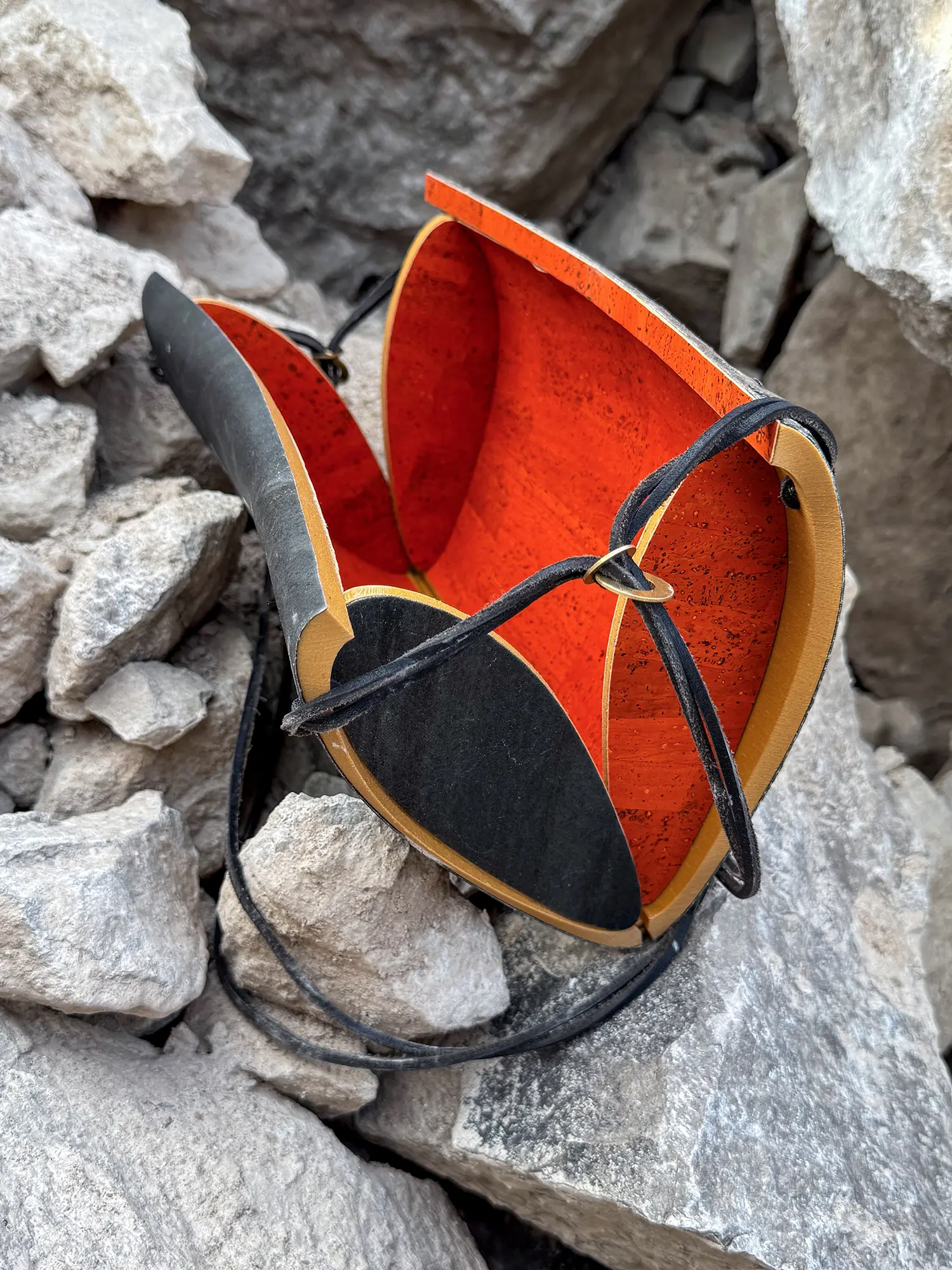
Open Pyroclast evening bag with orange interior
Pyroclast · Construction
Form and function become one in design and execution if the nature of materials and method and purpose are all in unison.
— Frank Lloyd Wright

The point of departure is material, the goal is functional objects; the path between them is purpose-driven form. Originally an architectural principle, “Form Follows Function” serves for AUREIR as the key to transforming assembled components into an object whose utility extends beyond inspiration and decoration.

The focus on functionality is not understood as an argument for technocratic disregard of aesthetics or emotional impact.

Rather, it functions as a conceptual transmission mechanism, translating abstract fascination into concrete human ex-perience.

An AUREIR object emancipates itself from the parasitic dependency of purely artistic objects on the audience’s identification with their expression by fulfilling a practical function in everyday life. Identification becomes voluntary - and precisely for that reason, genuinely possible.

III · iii

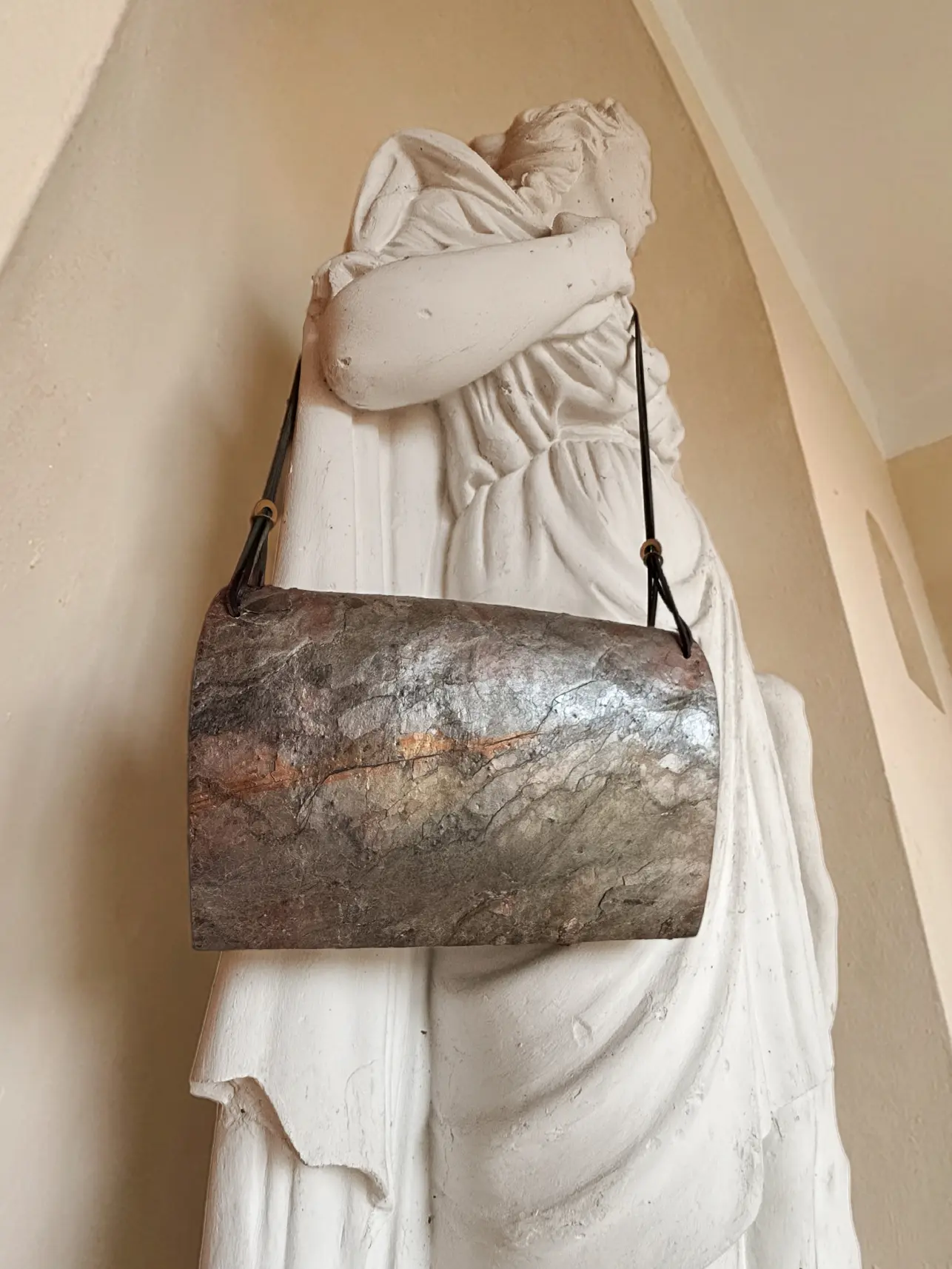
Pyroclast evening bag worn by a white statue
Pyroclast · body-proximate form

The primary factor in shaping function-driven forms from initially selected materials is the human body. The relationship between stone, cork, and filament in an AUREIR bag is determined first and foremost by the maximum weight that allows it to remain comfortably wearable. Its curvature follows the contours of the body parts it comes into contact with. For AUREIR, ergonomics is not an additional refinement, but the necessary path toward the actual goal: the synthesis of functional purpose and immersion in materiality.

The architectural approach resolves the apparent contradiction: just as a space must be neither too high nor too low to support its intended use, aesthetics can either obstruct or enable function. Colors and forms stimulate or restrain, create clarity, distraction, or specific emotional states.

Objects sui generis, for bodies sui generis.

To equate “form follows function” with minimalism falls short; to associate opulence with taste goes too far. Mental effect arises from perception, and perception depends on the senses, ultimately on the body.

AUREIR understands the human body as both the starting point and final measure of product design, without idealizing it or instrumentalizing it as identity. The question is not whether models fit into garments or whether they should. It is about garments that are neither too loose nor too tight. Bags with the right weight. Artefacts with an appropriate presence.

Objects sui generis - for bodies sui generis.

Coda · Intention III

They are metamodern — neither dogmatically collectivist nor individualist, but first and foremost: interesting.

— Robert Boehm