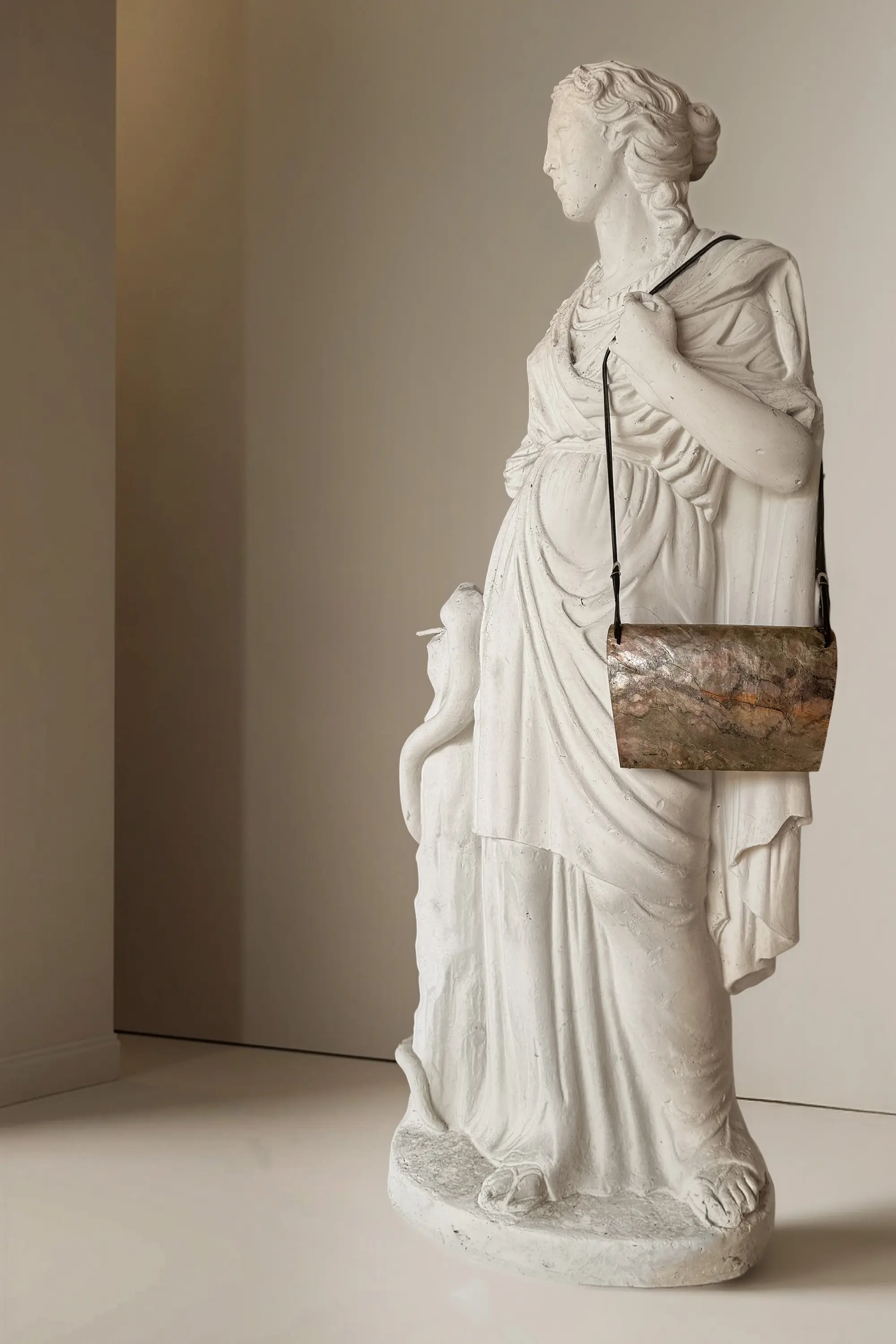
Guiding Principles.
"The fundamental expression of architectural forms […] is based, on the one hand, on the indicative qualities of built objects, and on the other, on the sensations of the sensing, moving body."
— Wolfgang Meisenheimer
I · i
Sui Generis.
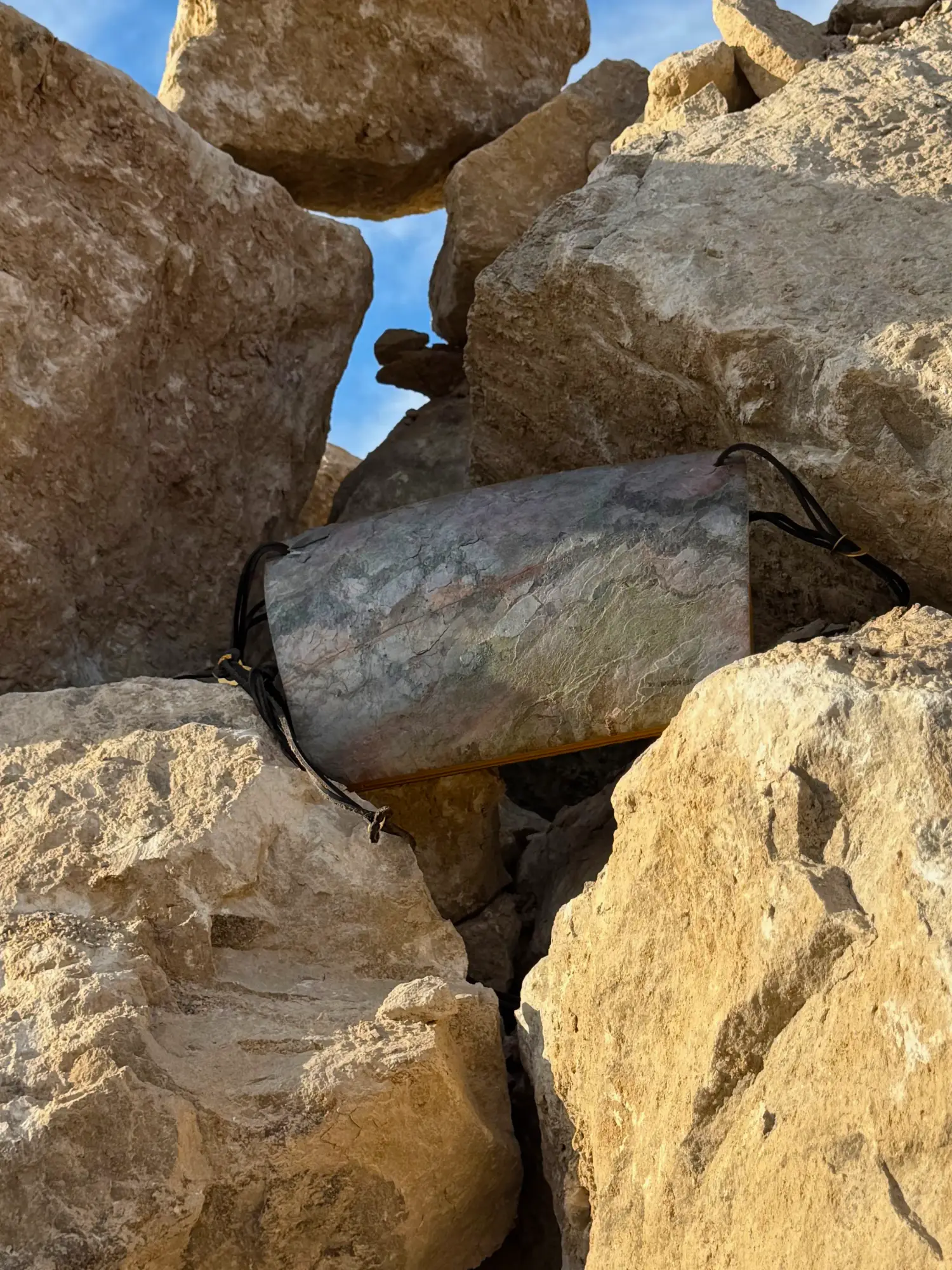
AUREIR objects stand alone. No context, no programme. A self-assured existence without the compulsive search for essence. Liberation of the object from abstract meaning. Present in the moment, like geological phenomena or newly discovered plants that have no designation yet. A sense of being moved by unconsciously formed aesthetics whose existence precedes human value judgements.
A self-contained commitment to individual responsibility.
A pause without the aftertaste of stale indifference. Stepping out and stepping back, enjoying the image — aware, all the while, of remaining part of the image.
Accordingly, the objects do not claim to provide answers beyond themselves to great questions, nor do they permit themselves to ignore them. AUREIR objects themselves are neither affront nor justification — but an honest commitment to self-determined individuality.
In the moment of wearing, a second dimension opens: not as a mirror of identity, but as an independent counterpart. The coexistence of body and object becomes a quiet dialogue between two forms that do not lay claim to one another.
I · ii
A Contribution to the Gesamtkunstwerk.
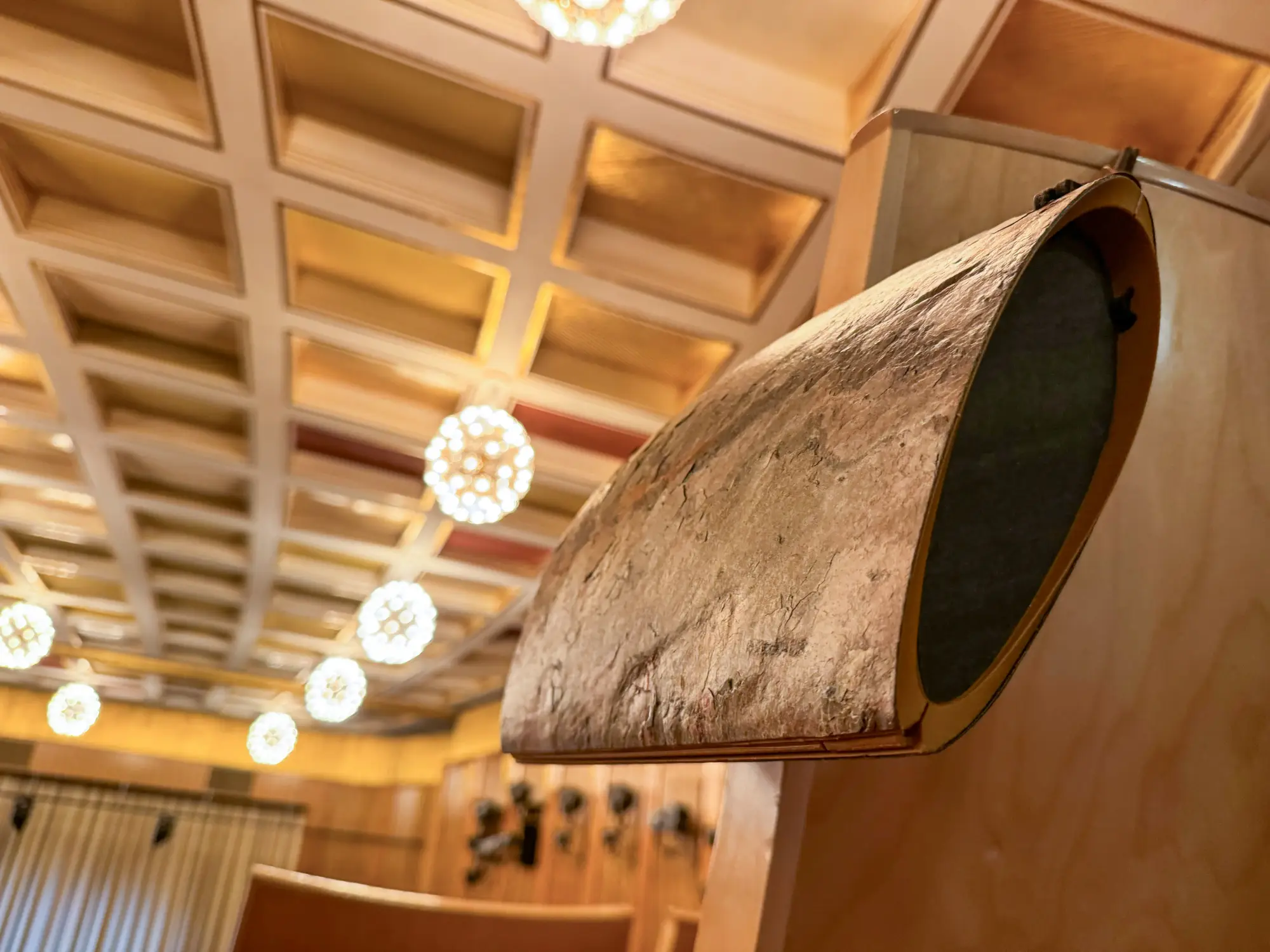
Elegance does not mean outshining the surrounding context, but entering into resonance with it in order to contribute a verse of one's own. Creating elegance is not a linear one-to-many process, but a collective act. Its result forms the Gesamtkunstwerk of the situation.
The art form that perhaps most strongly embodies this is opera, and indeed, visits to the opera are a central source of inspiration for AUREIR. It is not only stage design, music, acting, and poetry that merge into a whole beyond the sum of its components, but also the architecture of the opera house, the attire of the audience, and its conduct.
To wear them is a conscious decision; a creative act.
In a broader sense, art is not limited to the occasion itself, extending all the way to Joseph Beuys' concept that every human being is an artist and that communal life is shaped as social sculpture.
AUREIR objects understand themselves as utensils for this process. To wear them is a conscious decision; a creative act. Within this network, they take on the role of scores: precisely set, yet open to interpretation. They do not enter the situation as decorative details, but as independent components that make its complexity fully perceptible.
I · iii
Wearable Architecture.
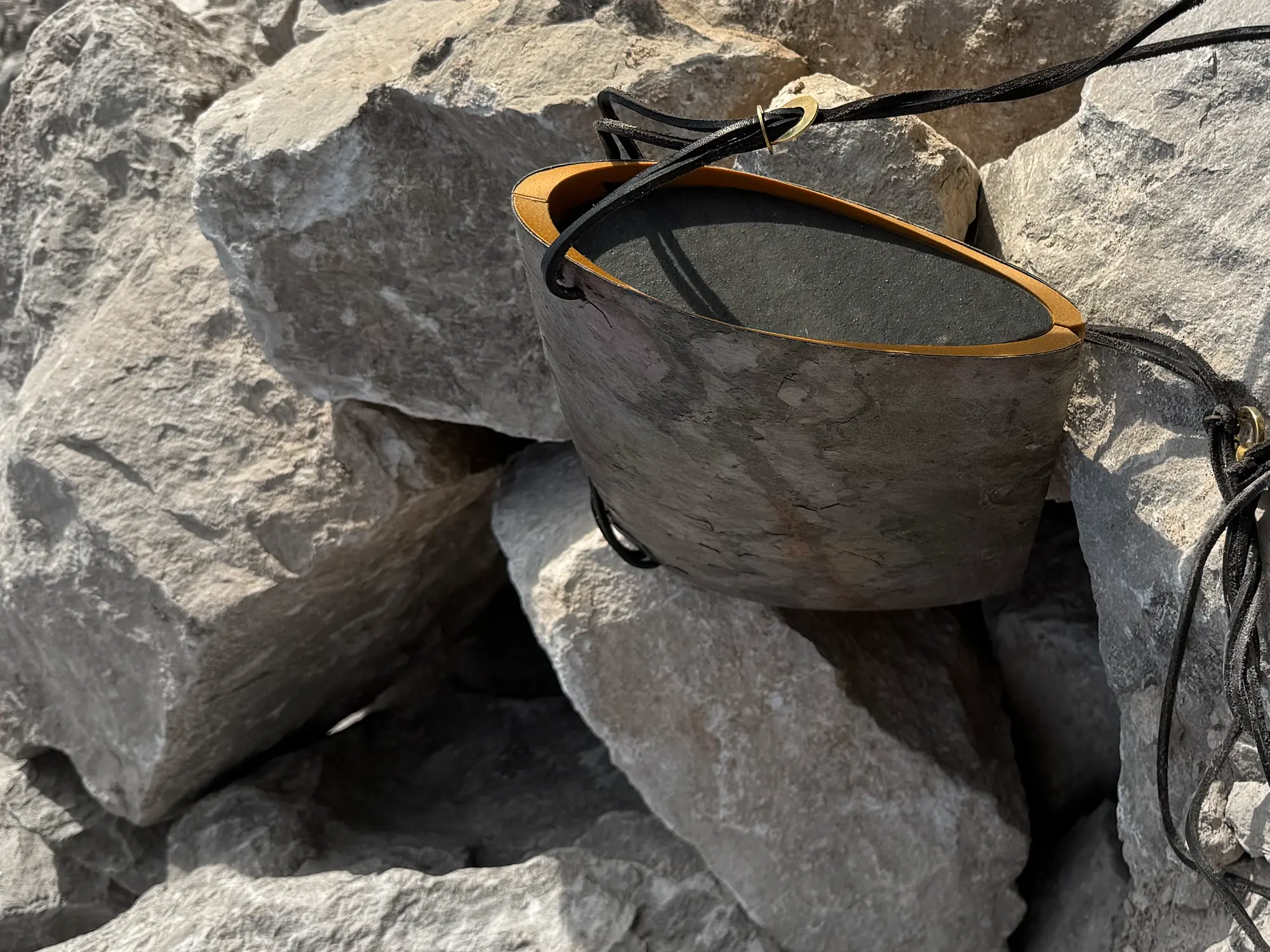
Architecture differs from pure art in that it pursues a practical purpose and takes account of the conditions that come with it. Unlike fashion, architecture is less fleeting and more strongly focused on collective effect than on making individual personality visible. AUREIR's concern is the creation of human-centred artefacts that understand human coexistence as a network of reciprocal effects. This brings to the fore the requirements of individuals as group beings, who both inhabit the social spaces of community and help shape them: individualism as a building block of collective creativity. Accordingly, AUREIR objects form a kind of wearable architecture; micro-architectures on the human body.
Designed to move into with one’s own character.
The foundation is a technology-based design process, closer to engineering than craft. The result is structures that combine stability, utility, and grace, and through aesthetic self-sufficiency do not conform to the given context but partly define it.
An AUREIR object is not conceived so that, through its purchase, one might express one's own character. Rather, it is conceived so that one may “move in” with one's own character, while allowing it, in its immediacy, to take up residence in one's life in return.
The object becomes a space of encounter. It holds body lines, responds to posture and movement, and gains form through this mutual interpenetration of person and artefact.